Engineering Economic Analysis of HICLOVER Waste Incinerator Systems
In today’s competitive industrial landscape, **waste incinerators** have become integral to sustainable waste management strategies. Engineers and technical professionals closely evaluate parameters such as **Incinerator smoke**, **Malawi animal waste incinerator**, **Equatorial Guinea small incinerator**, and **Sudan mobile incinerator** when considering investments. Industrial standards demand adherence to rigorous specifications, including **medical incinerator operating temperature standards** within a broad temperature range, ensuring engineering reliability and compliance with international norms. In addition, evaluations often extend to pricing metrics like **pet cremation incinerator cost** and comparative performance in markets such as **medical incinerator italy**. Such analyses critically assess combustion principles, thermal retention in dual chambers, and cost-effectiveness in diverse operational environments.
Technical and Operational Analysis
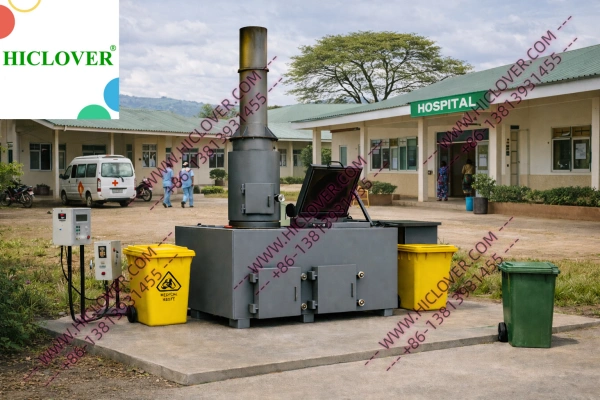
The design and performance of HICLOVER waste incinerator systems are underscored by advanced combustion principles and technical temperature standards. The dual chamber design incorporated in these systems leverages primary and secondary combustion chambers to meet international regulatory guidelines, including those advocated by the WHO and EU emission frameworks. The precision engineering involved ensures that the incinerator meets rigorous performance measurements, such as optimal thermal retention and effective reduction of **Incinerator smoke** emissions. This operation is crucial in crisis zones and humanitarian camps, where rapid waste disposal and carbon emission reduction pressure demand both efficiency and reliability.
Combustion Principles and Technological Integration
At the heart of the HICLOVER system is an advanced process that integrates PLC automation with adjustable chamber volumes. The incinerators operate over a specified temperature range crucial for compliant and effective thermal destruction of various waste streams. Technical specifications emphasize the importance of a stable high temperature retention in the secondary chamber, ensuring that no hazardous particulates escape, even under the most demanding scenarios. The incorporation of dual combustion chambers not only optimizes energy consumption but also addresses environmental concerns by minimizing the release of harmful emissions. Moreover, options for either dry or wet scrubbers enhance emission control and further align with ESG compliance requirements. Digital automation in industrial equipment has enabled remote monitoring and precise process adjustments, enhancing both operational efficacy and safety protocols.
The design categorizes incinerators uniquely – from fixed models to containerized modular systems suitable for remote mining or oil camps. HICLOVER’s engineering experience emphasizes mobile plug-and-play design for applications including **Sudan mobile incinerator** configurations, which favor deployment in remote regions. The systematic evaluation often compares equipment featuring PLC versus manual control, ensuring that automation is adequately leveraged to achieve reliable operational standards. For instance, comparisons between fixed versus containerized units have showcased substantial advantages in terms of adaptability and ease of installation. In a rapidly changing global environment, where digital automation and stable supply chain resilience are paramount, HICLOVER systems consistently demonstrate robust performance backed by in-house manufacturing advantages. An in-depth look at ensuing technological nuances can be found at HICLOVER, where detailed engineering insights on modular systems and exhaust abatement methods are available.
Supplementary technical insights, including temperature stabilization and emission metrics, are also documented in research available online. For further verification of thermal and combustion standards, an illustrative query on [https://www.google.com/search?q=medical+incinerator+secondary+chamber+temperature+standard](www.google.com/search?q=medical+incinerator+secondary+chamber+temperature+standard) provides additional context on secondary chamber temperature benchmarks. The emphasis on high-temperature retention and the integrated use of PLC automation in these units further standardizes operational procedures in both stationary and mobile applications.
Economic Benefits and Global Market Implications
Beyond pure technical performance, economic metrics such as cost-effectiveness, ROI, and global adaptability play an essential role in assessing waste incineration technology today. HICLOVER waste incinerators are engineered to deliver excellent return on investment (ROI) through stable supply chain management and factory direct supply channels. The ability of these systems to be rapidly deployed, as evidenced by containerized modular configurations and mobile designs, makes them an attractive option for regions with diverse waste streams, including industrial hubs and crisis zones. Considerations targeted at **incinerator for sale** markets account for both upfront costs and long-term operational savings. The modular design allows for adaptability in different regional markets, responding to strict environmental regulations and shifts in global waste processing requirements.
Cost-Effectiveness and Supply Chain Resilience
A deep dive into the components reveals that every feature of the HICLOVER waste incinerator is optimized for durability and operational sustainability. With options varying from containerized fixed systems to highly mobile plug-and-play models, HICLOVER addresses the needs of diverse customers — including remote sites that require decentralized waste management. The competitiveness of HICLOVER systems is further supported by customizable chamber volumes and integrated dry scrubber versus wet scrubber options, ensuring compliance with international emission standards. This attention to evolving regulatory frameworks has solidified the systems’ widespread acceptance in markets emphasizing global infectious disease preparedness and